

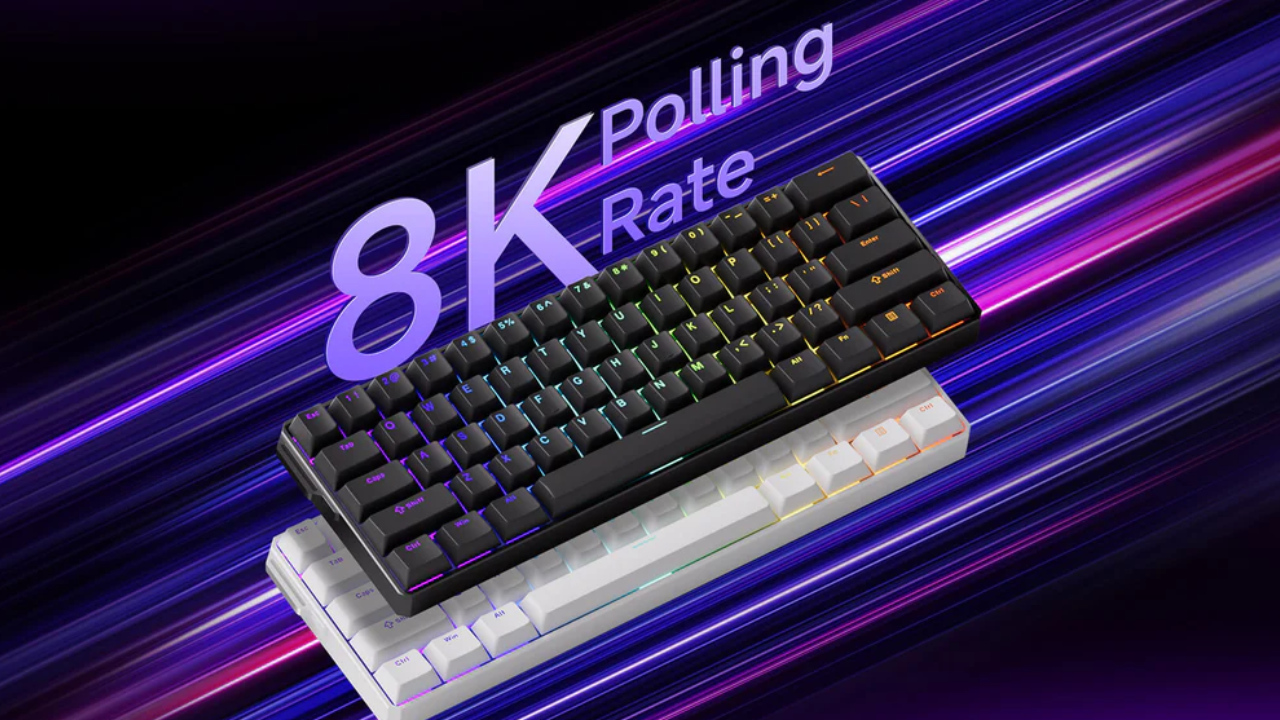
In the world of mechanical keyboards and high-performance gaming peripherals, keyboard polling rate test is a critical yet often overlooked specification. Gamers, programmers, and fast typists demand precision, and a keyboard’s polling rate directly impacts responsiveness.
But what exactly is a keyboard polling rate test, and why does it matter? How can you measure it accurately, and what do the top search results reveal about the best testing methods?
This in-depth guide will explore:
✔ What keyboard polling rate test means
✔ Why testing it is essential for performance
✔ Different methods to measure polling rate
✔ Common misconceptions and myths
✔ How to interpret test results
By the end, you’ll know exactly how to check your keyboard polling rate and optimize it for the best experience.
What Is Keyboard Polling Rate?
Definition and Importance
The keyword polling rate test refers to how often it sends input signals to the computer, measured in Hertz (Hz).
- 125Hz → Reports input every 8ms (standard for most office keyboards)
- 250Hz → Reports input every 4ms (common in mid-range gaming keyboards)
- 500Hz → Reports input every 2ms (high-performance mechanical keyboards)
- 1000Hz → Reports input every 1ms (elite gaming keyboards)
A higher polling rate means lower input lag, which is crucial for:
- Competitive gaming (FPS, MOBA, fighting games)
- Fast typing (programming, data entry)
- Precision tasks (video editing, CAD work)
Polling Rate vs. Debounce Time
Many users confuse polling rate with debounce time, but they are different:
- Polling Rate → How often the keyboard updates the PC.
- Debounce Time → How long a key suppresses extra signals to prevent “double presses.”
A keyboard with a high polling rate but poor debounce can still feel sluggish.
Why Should Your Keyboard Polling Rate Test?
1. Verify Manufacturer Claims
Some brands advertise 1000Hz polling but fail to deliver consistently. Testing ensures you get what you paid for.
2. Optimize Gaming Performance
In fast-paced games like CS:GO, Valorant, or Fortnite, even a few milliseconds of delay can mean the difference between a win and a loss.
3. Diagnose Input Lag Issues
If your keyboard feels “slow” or unresponsive, a polling rate test can confirm whether the issue is hardware-related.
4. Compare Different Keyboards
Testing helps you decide between multiple keyboards by measuring real-world performance.
How to Test Keyboard Polling Rate Test
Method 1: Software-Based Testing (Most Accurate)
Several tools can measure polling rate precisely:
A. HIDUSBF (Forced Polling Rate Adjustment)
- Originally designed for mice but works for keyboards.
- Can force higher polling rates on compatible devices.
- Shows real-time data transfer frequency.
B. Keyboard Latency Testers (DIY Approach)
- Use a high-speed camera (240FPS+) to record keystrokes.
- Count frames between keypress and on-screen response.
- Calculate polling rate based on delay.
Method 2: Online Polling Rate Checkers (Quick but Less Precise)
Some websites estimate polling rate by:
- Rapidly registering keystrokes.
- Measuring the time between registered inputs.
- Providing an approximate Hz value.
(Note: Browser limitations can affect accuracy.)
Method 3: Manual Observation (Basic Check)
- Open Notepad or a text editor.
- Rapidly press a key (e.g., Spacebar).
- If inputs appear smoothly → High polling rate.
- If inputs lag or skip → Low polling rate.
(This method is subjective but useful for quick checks.)
Common Myths About Keyboard Polling Rate Test
Myth 1: “Higher Polling Rate Always Means Better Performance”
- Truth: Beyond 1000Hz, human perception barely notices a difference.
- Exception: Pro esports players may benefit from ultra-high polling.
Myth 2: “All Mechanical Keyboards Have High Polling Rates”
- Truth: Some mechanical keyboards still use 125Hz or 250Hz.
- Check specs before buying.
Myth 3: “Polling Rate Doesn’t Matter for Typing”
- Truth: While gaming benefits most, fast typists (120+ WPM) will notice smoother input at 500Hz+.
How to Improve Keyboard Polling Rate Test
1. Use a Wired Connection
Wireless keyboards often have lower polling rate test due to Bluetooth/USB limitations.
2. Update Firmware
Some keyboards receive polling rate boosts via firmware updates.
3. Enable “Game Mode” (If Available)
Many gaming keyboards have a turbo polling mode in their software.
4. Avoid USB Hubs
Plugging directly into the motherboard reduces potential signal delays.
Conclusion: Is Polling Rate Testing Worth It?
For casual users, a basic keyboard with 125Hz-250Hz is sufficient. However, gamers, programmers, and power users should test and optimize their keyboard polling rate test for peak performance.
Key Takeaways:
✅ Polling rate determines how often your keyboard updates the PC.
✅ Higher Hz = Lower input lag (critical for gaming).
✅ Test using software, online tools, or manual checks.
✅ Not all “gaming keyboards” deliver advertised polling rates.
By understanding and testing your keyboard polling rate test, you can ensure the best possible responsiveness for your needs.