

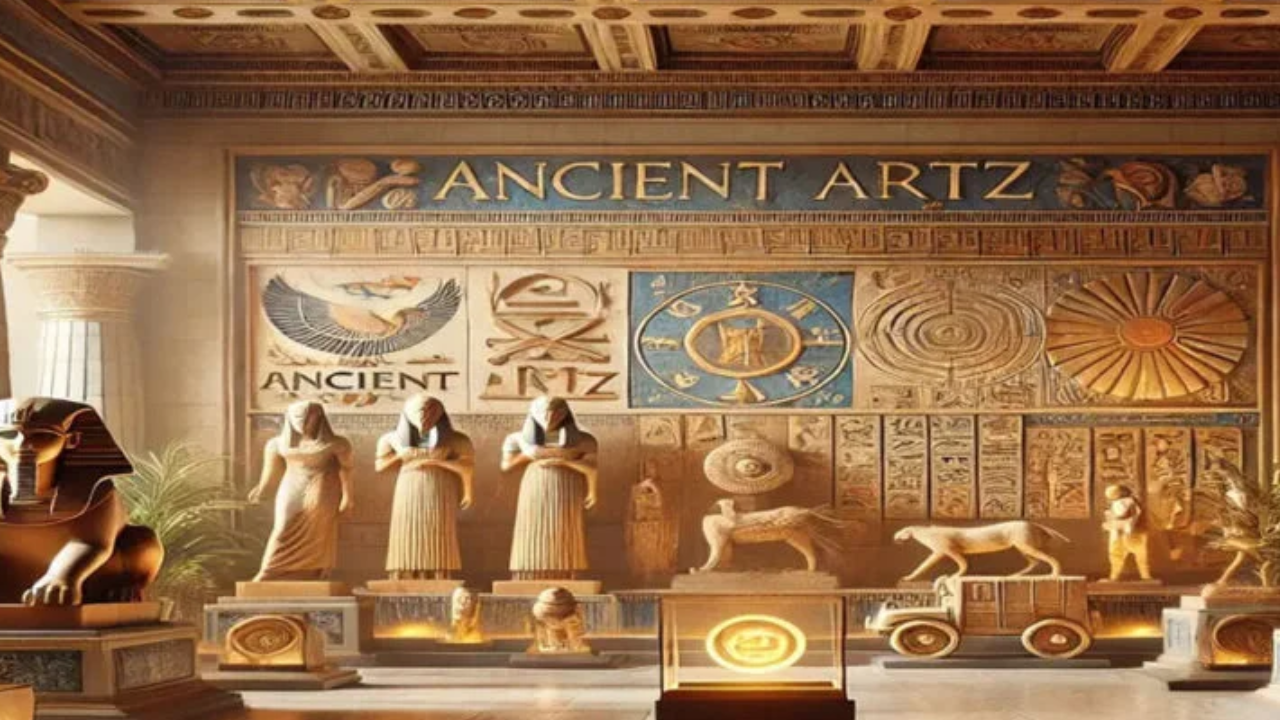
The human story is written not just in language, but in pigments, carvings, and stone. From cave walls in Lascaux to the temples of ancient Egypt and the serene sculptures of Greece, the visual legacy of our ancestors endures. These masterpieces, collectively known as ancient artz, tell tales of cultures long gone yet forever influential. They represent our shared past and offer insight into the beliefs, struggles, and triumphs of early civilizations.
Understanding ancient artz is more than admiring decorative artifacts — it’s an exploration into the soul of human creativity. As we trace this journey through time, we begin to see not just what was created, but why it mattered.
The Origins of Artistic Expression
Before the written word, before mathematics and cities, there was art. Some of the earliest known pieces date back over 40,000 years — hand stencils and animal depictions drawn deep within prehistoric caves. These artworks served ritualistic, symbolic, or storytelling purposes, and they laid the groundwork for what would become the rich tradition of ancient artz.
Cave Art and Early Symbolism
The caves of Chauvet in France and Altamira in Spain are famous for their hauntingly beautiful murals of mammoths, deer, and handprints. These weren’t just idle sketches; they reflected social, spiritual, and environmental concerns of the time. The artists used natural pigments made from charcoal, ochre, and iron oxide, often applying them with fingers, brushes, or even blowing the paint through hollow bones.
These primitive yet profound expressions are among the first known examples of ancient artz, demonstrating that even early humans had a deep-seated need to communicate and represent the world around them.
The Civilizations That Shaped Ancient Artz
Mesopotamia: The Cradle of Civilization
Often regarded as the birthplace of civilization, Mesopotamia contributed significantly to the canon of ancient artz. Its art was primarily functional — serving religious, political, and economic purposes. Cylinder seals, carved with detailed scenes, acted as signatures and also depicted mythology and daily life.
Ziggurats, sculptures of deities, and engraved tablets illustrate how art was woven into the very fabric of Mesopotamian life. Their symbolic motifs and narrative-driven carvings became foundational influences for later cultures.
Egypt: Art as Immortality
Few ancient civilizations are as visually iconic as Egypt. With its hieroglyphs, massive pyramids, and gold-laden tombs, Egypt elevated ancient artz into a ritual of eternal significance. Art in Egypt was not created for personal expression but to fulfill spiritual purposes, especially surrounding the afterlife.
Pharaohs commissioned temples filled with wall paintings and sculptures to ensure their legacy. The consistent style, marked by profile heads with frontal torsos and rigid postures, wasn’t accidental — it followed a sacred canon believed to preserve cosmic order.
Greece: The Ideal Form
Greek artists pursued perfection in proportion, symmetry, and human anatomy. The shift from the rigid Kouros statues of the Archaic period to the fluid realism of the Classical period signaled a profound transformation in ancient arts. For the Greeks, beauty was a path to truth.
Sculptures like the Discobolus and architecture like the Parthenon are testaments to this pursuit. Even pottery, decorated with scenes of mythology and daily life, shows their commitment to aesthetics and narrative.
China and the East: Harmony and Nature
The ancient Chinese approach to art was philosophical, blending aesthetics with Confucian, Daoist, and later Buddhist beliefs. Calligraphy, ink painting, and jade carving all played key roles. The Terracotta Army, perhaps the most famous example, reflects not only military power but also spiritual beliefs about the afterlife.
Unlike in the West, where realism became dominant, Chinese ancient arts emphasized balance, nature, and inner essence — valuing the invisible as much as the visible.
Techniques and Materials in Ancient Artz
Sculpture and Relief
Carving in stone, clay, and wood allowed ancient artists to create enduring forms. Relief carvings — where images are raised from a flat background — were common in Egypt, Mesopotamia, and India. These forms helped document victories, religious rituals, and social hierarchies.
Sculpture offered a three-dimensional understanding of beauty and divinity. From the stoic figures of Easter Island to the grace of Aphrodite, sculpture played a central role in ancient artz.
Painting and Pigments
Natural minerals provided the color palette of antiquity. Artists used lime, iron oxides, and plant-based dyes. Fresco techniques, notably in Minoan Crete and Roman Pompeii, involved applying pigment to wet plaster for durability.
Wall paintings didn’t just decorate — they communicated. In Buddhist caves of India or the tombs of Egyptian nobles, paintings were instructional, spiritual, and symbolic.
Ceramics and Pottery
Functional art was equally important. Greek amphorae, Chinese porcelain, and Roman terra sigillata combined utility with decoration. Pottery offered a canvas for myths, epics, and social commentary, helping scholars today reconstruct forgotten ways of life.
Cultural Significance and Symbolism
Understanding ancient artz requires decoding its symbols. For example, the lotus in Egyptian art symbolized rebirth, while in Buddhist art, it represents enlightenment. Animals often embodied virtues — lions for strength, snakes for renewal, and owls for wisdom.
These symbolic systems varied but universally served to communicate deeper truths. They connected the material world with the spiritual, the mortal with the divine.
Rediscovery and Preservation
Much of ancient artz would have been lost without rediscovery. From the Renaissance revival of Greco-Roman statues to the 19th-century excavations in Mesopotamia, the modern world owes a debt to the archaeologists and historians who brought these treasures back into public consciousness.
Today, museums like the Louvre, the British Museum, and the Met house countless artifacts that continue to inspire. But their presence also raises ethical debates about cultural ownership and repatriation, reminding us that ancient art remains politically and emotionally charged.
Practical Use Cases: How Ancient Artz Influences Today
Architecture and Design
Many modern buildings borrow heavily from ancient structures. Doric and Ionic columns from Greek architecture appear in government buildings, while motifs from Egyptian and Mayan temples inspire everything from movie sets to luxury resorts.
Fashion and Jewelry
Designers often look to ancient motifs — geometric Greek patterns, Egyptian ankh symbols, and jade from ancient China. These elements give contemporary styles historical depth and cultural resonance.
Tattoo Art and Body Adornment
Symbols from ancient artz have become popular in tattoo culture, with runes, hieroglyphs, and tribal designs serving as personal expressions of ancient identity and heritage.
Education and Media
From documentaries to video games, the visual language of ancient artz helps bring history to life. Virtual reality tours of ancient cities and 3D renderings of sculptures allow immersive learning experiences for students and enthusiasts alike.
Frequently Asked Questions (FAQs)
1. Why is ancient artz important today?
It connects us with humanity’s origins, offering insights into early cultures, beliefs, and innovations that continue to shape our world.
2. How were ancient artworks preserved for so long?
Many were made from durable materials like stone and clay, preserved by dry climates, burial, or protective architecture. Modern conservation efforts also play a big role.
3. Are there any ethical issues in displaying ancient artifacts in museums?
Yes. Some artifacts were taken during colonial periods or through illicit trade, sparking debates about repatriation to their countries of origin.
4. What is the difference between ancient artz and modern art?
While ancient artz often served religious, political, or ritual purposes, modern art is more focused on individual expression. Techniques, materials, and themes have also evolved significantly.
5. Can anyone study or access ancient artz today?
Absolutely. Through museums, online archives, academic courses, and digital reconstructions, ancient artz is more accessible than ever.
Conclusion: Why Ancient Artz Still Matters
Despite the passing of millennia, the power of ancient artz has not diminished. It continues to stir our imagination, challenge our understanding, and deepen our connection to the human story. Each sculpture, painting, or symbol is a bridge — spanning time and geography — reminding us that creativity is one of our most enduring legacies.
As we move forward in a rapidly digitizing world, the enduring relevance of ancient artz offers something essential: a mirror into our past and a compass for our cultural future. Whether admired in a museum, studied in a classroom, or referenced in pop culture, its beauty and message continue to resonate — reminding us that art, truly, is timeless.